a blog of Queensland labour history
This page publishes articles, reports, reviews, news, audio and visual works and other items of interest relating to the history of labour in Queensland. It complements the BLHA’s main publication, the Queensland Journal of Labour History. Submissions are welcome. The editor can be contacted via qldlabhist@gmail.com.
_______
The Age of Union Halls
The Broken Hill Trades Hall and the Victorian Trades Hall, in Naarm (Melbourne), have been nominated for UNESCO World Heritage recognition. Jeff Rickertt examines the significance of the nomination and what these grand buildings of the workers’ movement tell us about trade unionism, then and now.
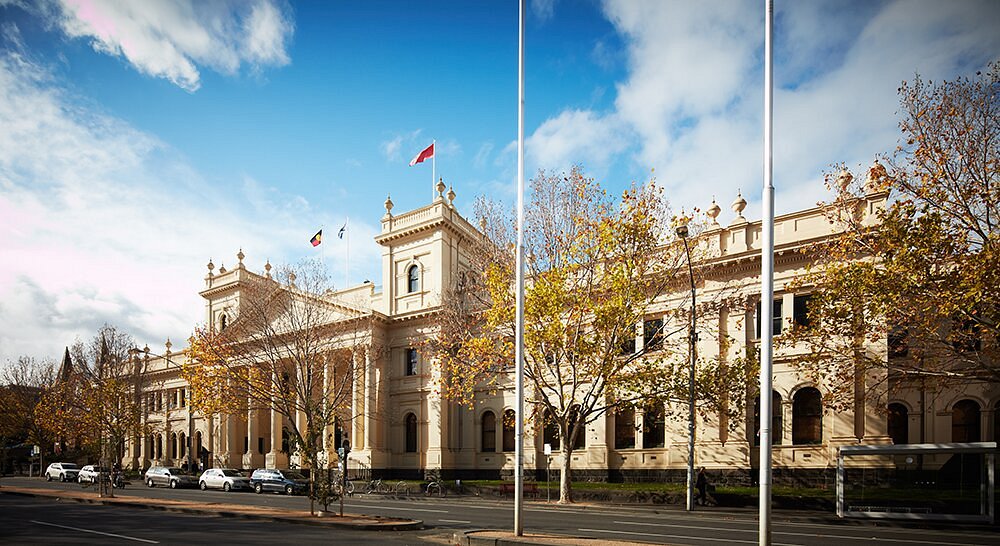
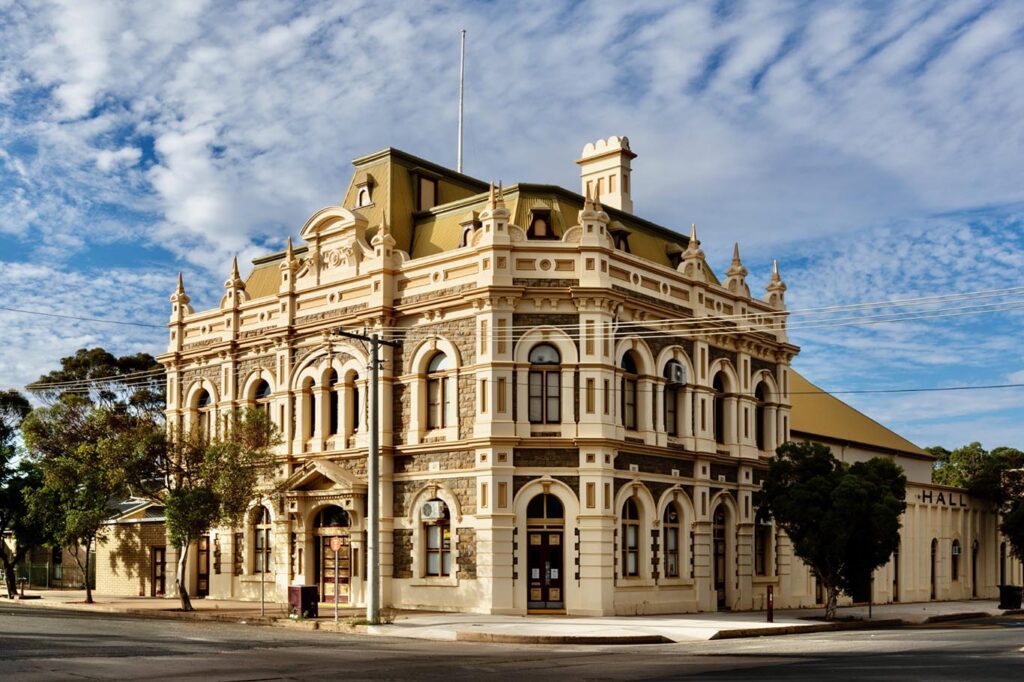
Victorian Trades Hall and Broken Hill Trades Hall
Two Australian trade union halls were recently nominated for UNESCO World Heritage recognition. The Broken Hill Trades Hall and the Victorian Trades Hall, in Naarm (Melbourne), have been nominated as part of a transnational submission that includes the Workers’ Assembly Hall in Copenhagen, Denmark, the Feestlokaal Vooruit (Vooruit Festival Hall), in Ghent, Belgium, and the Edificio de la Confederación General del Trabajo (General Confederation of Labour Building), in Buenos Aires, Argentina. The five buildings have been entered on UNESCO’s Tentative List pending a final determination.
UNESCO – the United Nations Educational, Scientific and Cultural Organization – is a UN agency dedicated to “strengthening international cooperation in the fields of education, science, culture, and information.” Under the Convention Concerning the Protection of the World Cultural and Natural Heritage, adopted by UNESCO in 1972, the agency’s mission includes supporting countries “in protecting and safeguarding cultural and natural heritage.” The main way it does this is by maintaining a World Heritage List of natural or cultural sites of “outstanding universal value”. These sites are regarded as belonging to all the peoples of the world, irrespective of the territory on which they are located. Nations are expected to safeguard listed places under their sovereign control.
Currently there are 1273 locations on the List, of which 21 are in Australia. The Australian entries include places recognised for a mixture of cultural and natural significance: Kakadu National Park, the Willandra Lakes Region, the Tasmanian Wilderness, and the Uluru Kata Tjuta National Park. Several other sites are listed on cultural grounds alone: the Royal Exhibition Building and Carlton Gardens in Naarm, the Sydney Opera House, Australian Convict Sites, the Budj Bim Cultural Landscape and the Murujuga Cultural Landscape.
The nomination of the five union halls breaks new ground in drawing attention to the role of workers’ movements. No other entry on either the World Heritage List or the Tentative List specifically references organised labour as a social force with significance to humanity. Yet, as the halls’ nomination document points out, these movements “profoundly shaped our modern world.” By grouping the Australian halls with like buildings in Denmark, Belgium and Argentina, the nomination makes the point that unionism’s emergence was both global in scope and internationalist in outlook. As the submission declares, the halls bear eloquent testimony “to the development of the international democratic labour movement and its impact on societies on a universal scale.” …. read more.
Jeff Rickertt
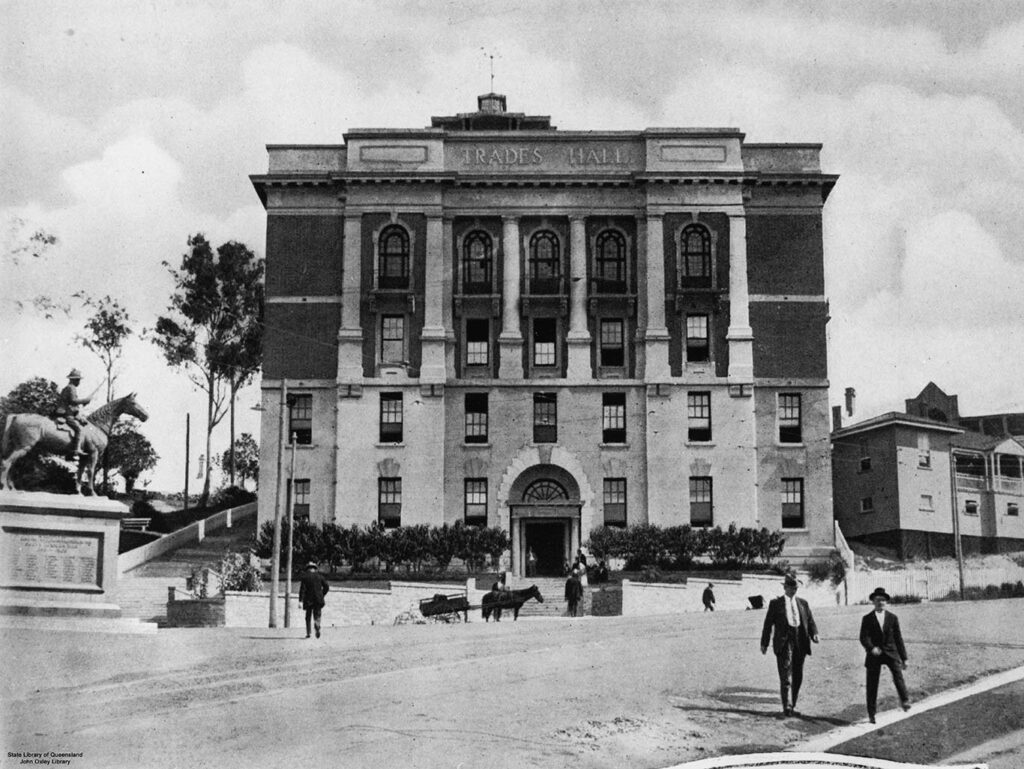
Brisbane Trades Hall, centre of the Queensland union movement from 1923 to 1985
29 September 2026
_______
‘Conviction Politics’: Convict Resistance and Australian Democracy
“Trade unionism and democracy did not start with Eureka or the strikes of the 1890s. They landed on our shores shackled in chains.”
So declares the curators of Conviction Politics, a major digital project which documents and analyses the collective resistance of convicts in the Australian colonies. Building on Tony Moore’s book Death or Liberty, the international documentary of the same name and Michael Quinlan’s The Origins of Worker Mobilisation 1788-1850, Conviction Politics reveals how “from the earliest days of British settlement, Australia’s first work force resisted exploitation through inventive solidarity in the face of coercion, while a vanguard of [around 3600] transported rebels, liberal pamphleteers, industrial protesters and radical agitators changed the political direction of the colonies.”
Led by Moore from Monash University and supported by the Australian Research Council and community partners, including the Australian Manufacturing Workers’ Union, the New South Wales Teachers’ Federation and the ACTU’s Union Education Foundation, the project brings together various strands of research to provide a new perspective on the origins of trade unionism, workers’ rights and political democracy in Australia.
This is a resource for everyone. The wealth of curated material in Conviction Politics is not locked away behind pay walls or university-controlled datasets. The entire content, including documentaries, publications, digitised objects and music, can be accessed for free at the project’s online hub. So vast is the trove, the obvious question is, where to begin? The portal has a search function, filters, tabs for stories, people, times and places, and even an index to help with navigation. For the sheer joy of discovery, however, nothing beats random browsing.
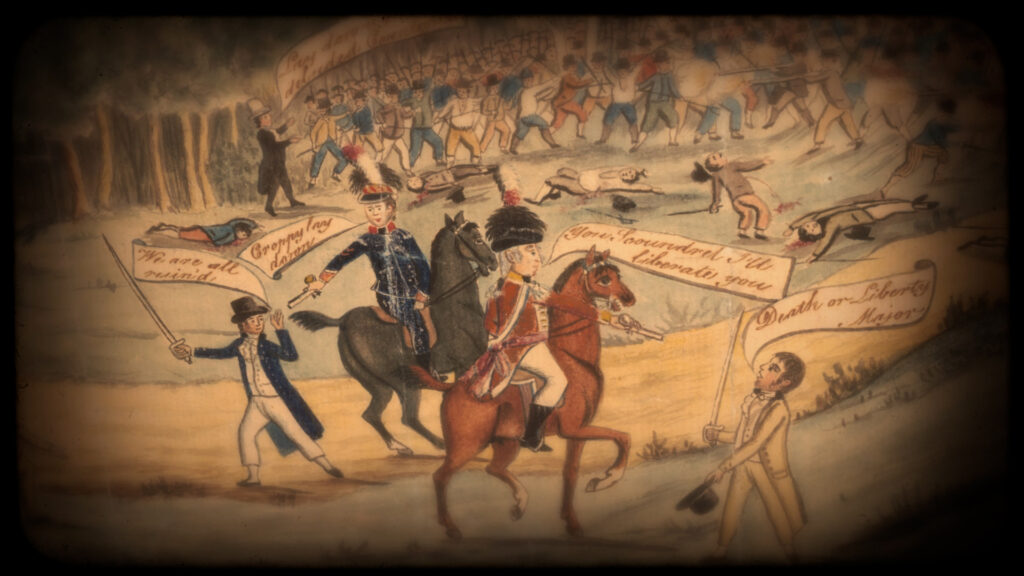
In March 1804, convicts at Parramatta rose up, demanding ‘death or liberty, and a ship to take us home’. When their leader, Philip Cunningham, appeared with a flag of truce he was arrested. The soldiers then opened fired. At least 15 rebels were killed and the others recaptured.
14 August 2026
_______
Global Labour Rights Matter
The International Trade Union Confederation (ITUC), the self-described “global voice of the world’s working people,” recently released its 2026 Global Rights Index, documenting the state of workers’ rights in law and practice across 169 countries. It makes for grim reading. “The freedoms and rights that ordinary people rely on to maintain the most basic living standards and fair working conditions,” the Index concludes, “are under concerted attack by a tiny minority that is focused on the accumulation of wealth and power at the expense of all of us.” The survey identified a “systematic weakening of democracy through attacks on workers, unions and collective bargaining.”
Against this trend, the International Court of Justice (ICJ) ruled in May after years of employer resistance that the International Labour Organisation’s Convention 87 on freedom of association and the right to organise does protect the right to strike. It is a welcome determination, but will it make a difference? Especially when we are facing, as the ITUC puts it, “a billionaire coup against democracy.” Howard Guille has been looking at both the ICJ decision and the ITUC report, and provides this overview.
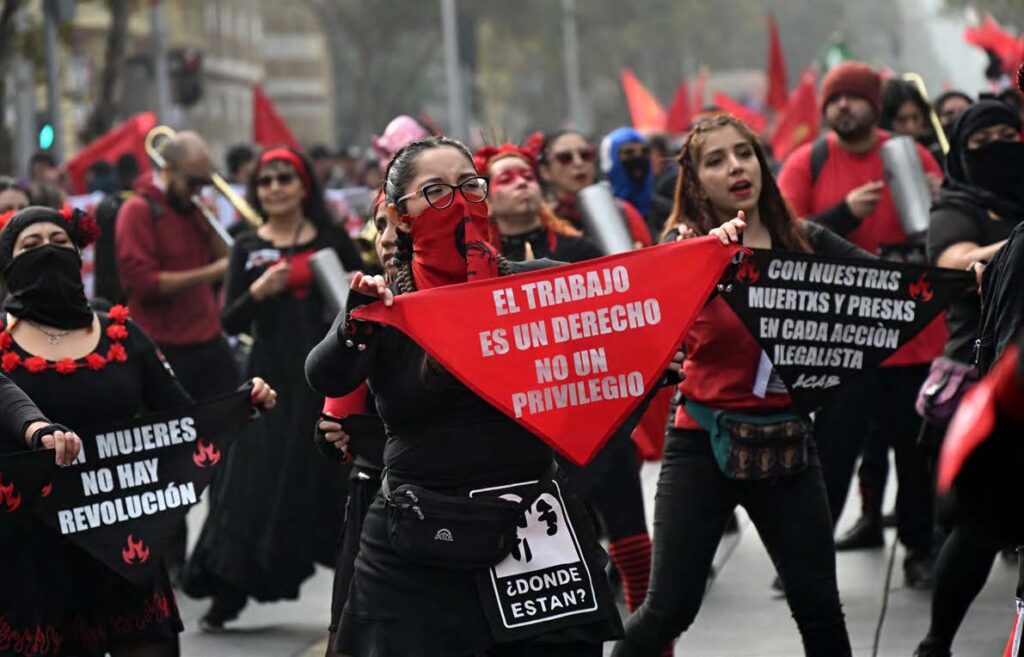
Workers march in Santiago, May Day 2025
Global Labour Rights Matter; and it matters that they are being abused
The International Labour Organisation (ILO) is hardly front of mind for union members in a Queensland workplace. Quoting an ILO Convention might do little to change the boss’s behaviour and deficiencies. Yet almost any argument between workers and bosses can be linked to and informed by ILO conventions and determinations. When a boss acknowledges something in an award or agreement, it is worth realising that some of the legislative, regulatory framework of terms and conditions and of ‘fairness’ at work expressly rests on the ILO conventions about Freedom of Association (number 87) and Right to Organise and Collectively Bargain (number 98)….
A further and very crucial advance in specifying workers’ rights has been made in 2026. In May, the International Court of Justice (ICJ) ruled that ILO Convention 87 on freedom of association and independent unions protects the right to strike. The ICJ was asked to adjudicate via an advisory opinion after the employers in ILO forums had been contesting the existence of a right to strike in for 14 years. As IndustriALL Global Union said,‘This is a massive win for workers worldwide and the result of more than a decade of campaigning’….
The ICJ ruling on the right to strike is a rare positive in the deplorable and deteriorating state of labour rights across the world. Almost everywhere, workers are being put into very unpleasant and invidious situations. The Global Rights Index of the International Trade Union Confederation (ITUC) documents violations of workers’ rights in law and in practice across 169 countries. It collects information in two ways. One is violation of rights as reported by unions affiliated to ITUC. The other is a scoring of national legislation against 97 indicators derived from ILO Conventions and jurisprudence. Each country is scored from 1 (Sporadic violations of rights) to 5 (No guarantee of rights). The 2026 report is the thirteenth.
The ITUC starkly says in the 2026 Index that ‘we are facing a billionaire coup against democracy’…. read more.
Howard Guille
17 July 2026
_______
Labor’s Socialist Objectives
The media brouhaha around Treasurer Jim Chalmers’ modest effort to rein in some of the publicly-funded largesse to capital in the form of negative gearing and capital gains tax concessions reminds us that even the modern Labor Party can still sometimes touch a raw nerve with the owners of wealth. As Humphrey McQueen explained in 2021:
“Like every domain of life under the rule of capital, the state remains a site for conflict, the outcomes of which are conditioned by the relative strengths of the contending classes.”
These days the conflict is muted, so heavily does the relative strength favour the capitalist class. The very timidity of Labor’s proposed tweaks to the tax system tells the story. And Chalmers’ willingness to concede already that his measures might have gone too far serves only to highlight the point: wealth owners have all the clout. In the same budget, Chalmers took millions of dollars from NDIS clients, amongst the poorest and most vulnerable section of our community. There has been outrage over these cuts too, but no Labor back down, hardly even defensiveness. Meanwhile, military spending went up.
Workers do not have the organisational strength to hold the ALP to account, either for its constant concessions to business or for its attacks on the disadvantaged. But as the McQueen quote implies, this has not always been the case. In the past, the ALP came under real pressure from unions to make concessions to our side. Consequently, some of its policies had the effect of shifting wealth from capital to labour and even curtailing some of capital’s advantages.
The ebbs and flows of workers’ power in the forums of the ALP can be traced in the history of Labor’s own socialisation objective, a version of state socialism adopted to appease leftwing unions in 1921 and then periodically fought over at ALP conferences. It was not until the destruction of union power under the Accord agreements of the 1980s that the socialisation objective was finally relegated to the past, freeing Labor to implement its neoliberalist modernisation agenda.
On the centenary of the objective, Humphrey McQueen reflected on this history in an article he wrote for the Queensland Journal of Labour History. In the light of Jim Chalmers’ recent budget, we have decided to re-publish the piece here. Its rerun also marks the occasion of Humphrey presenting the 2026 Alex Macdonald Lecture for the Brisbane Labour History Association. Titled ‘Colouring-in the Rag Trade, 1850s to 1930s’, the lecture will be delivered at 6.00pm, Wednesday 1 July, at the ETU meeting room, Merivale Street, South Brisbane.
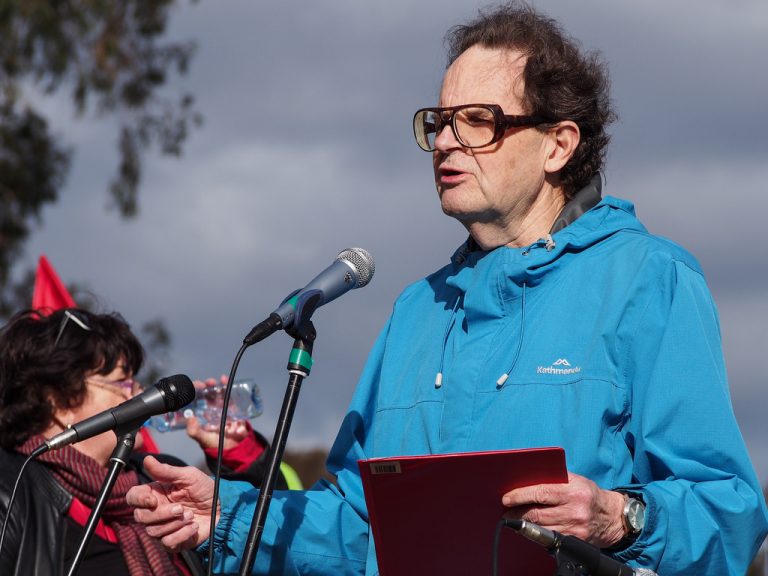
Humphrey McQueen on the stump
Labor’s Socialist Objectives: from ‘Socialist Tiger’ to ‘Sacred Cow’ to ‘Dead Dog’
Reflections on the centenary of the Socialization Objective of October 28, 1921
(originally published in the QJLH, No. 32 Autumn/Winter 2021)
All ‘news’ is fake because it derives from ‘the context of no context.’ Context, of course, is not everything since exactly how each decision is arrived at sculpts its content. The shaping context for the Labor Party’s adoption of a new Socialization Objective to October 1921 was twofold: first, the Bolshevik Revolution and, secondly, last century’s First Great Slaughter. The Objective’s content is a double surprise because it calls for socialization – not socialism or just nationalization – and outlines a plan for getting there.
Bourgeois revolutions succeeded before 1917, buffeted by rebellious working peoples. The Paris Commune in 1870-71 provided an exemplar for Soviet power through its councils of workers and soldiers. Where Russia stood alone was in surviving everything the forces of reaction threw at it. Japan’s armies of intervention did not withdraw until May 1922.
The centuries-long dream of a world free from war and from want was being realised. The aims of the Victorian Socialist Party since 1905were no longer songs at its Sunday school but deeds around the globe.
If Bolshevism provided the positive ingredient for adopting the Socialization Objective, the War to End All Wars was proof positive that monopolising capitals possessed not a shred of moral authority. More than ever, capitalism deserved to perish… read more.
Humphrey McQueen
21 June 2026
_______
Practising Democracy to Defend It
Sam Woripa Watson is a Wangeriburra and Birri Gubba man and a prominent justice activist in Brisbane. He is currently being held at gunpoint by the Israeli military, having been unlawfully abducted in international waters near Cyprus as he and hundreds of other activists were attempting to break Israel’s illegal siege of Gaza.
Before his boat was attacked, Sam spoke to supporters in Australia about the role of direct action in building pressure for progressive change. He made the point that the notorious Acts that controlled the lives of Aboriginal and Torres Strait Islander people in Queensland for generations were not abolished through parliamentary benevolence. They were, as he put it, smashed by blackfullas and their supporters taking to the streets. Rallying, marching, speaking out and occupying created the political pressure that led to reform. It required standing up to a racist police force. It involved arrests. Sam knows the history well. His grandfather, another Sam, was a leader of that struggle in the 1970s and 80s.
Sam’s observation highlights an important aspect of democracy. Many if not most important reforms start as acts of public dissent. The democratising of parliament itself began in the English Civil War. The abolition of slavery was precipitated by slave revolts. Unionisation of labour was outlawed in the UK until workers’ mass action in the 19th century threatened to erupt into outright rebellion. British women won the vote through militant civil disobedience.
Here in Australia, representative parliaments emerged from popular mobilisations that challenged the elitism of colonial governance. Protest movements expanded the scope of democracy, establishing that protest itself is a vital form of democratic engagement. As Terry Irving has explained:
Democracy was not only the goal of these movements, or movement if considered as a whole, but the content of its very practice. The movement was itself a manifestation of democracy, allowing non-elites an opportunity to participate actively in politics over matters of direct concern to them – in particular, matters of labour, land access and practical political equality. (The Southern Tree of Liberty, p.4)
This tradition has continued ever since. The massive street protests in Queensland in the Bjelke Petersen decades, for example, were democracy manifest, a direct popular repudiation of the corruption and authoritarianism of the party in power, and an expression of an alternative model of politics defined by direct participation and equality. The Goss Labor government that replaced the National Party in 1989 may have reformed away the worst elements of Bjelke Petersen’s malfeasance, but it should not be forgotten that the reformers in the Goss cabinet were themselves heavily influenced by this culture of mass defiance. Their party became electable because they (tentatively) gave voice to a mood for change that grew from narratives generated by the protest movements. The status quo could no longer hold, and the street mobilisations, backed on occasion by union industrial action, were decisive in facilitating that rupture. Popular democracy wrung the changes.
Today, across Australia, indeed the world, popular democracy is under attack. Free speech is being curtailed, protest activity is being criminalised, speaking out is framed as a ‘threat to social cohesion’. In Queensland, phrases expressing Palestinians’ desire to live without repression on their ancestral lands have been outlawed on the demonstrably absurd grounds that they incite antisemitism. Uttering or displaying these words can result in a two-year gaol term. One of Australia’s leading criminal defence lawyers, Nick Hanna, has described the ban as “undoubtedly one of the most repressive laws ever passed in this country.”
People are fighting back; protestors continue to take to the streets, civil society organisations are mobilising. One recent national initiative, from the Australian Democracy Network, calls upon organisations to endorse a Declaration of Our Right to Protest. So far, 120 organisations have signed on. The Brisbane Labour History Association will soon join the list. The sign on page is here.
Closer to home, the main Palestinian solidarity organisation in Brisbane, Justice for Palestine Magan-djin, has appealed to unions, faith groups and community organisations to sign a joint statement in support of their Not Our Law campaign, directed at the Queensland government’s attempt to silence Palestinian voices. The sign up is here. JFP can be contacted via their social media for more information.
Why should organisations endorse these statements? The answer that springs immediately to mind will be familiar to everyone in the labour movement; it is the old IWW slogan, ‘An Injury to One is an Injury to All’. Sooner or later, the erosion of democracy affects every one of us. So uniting now to defend it while we can is in everyone’s interests.
Jeff Rickertt
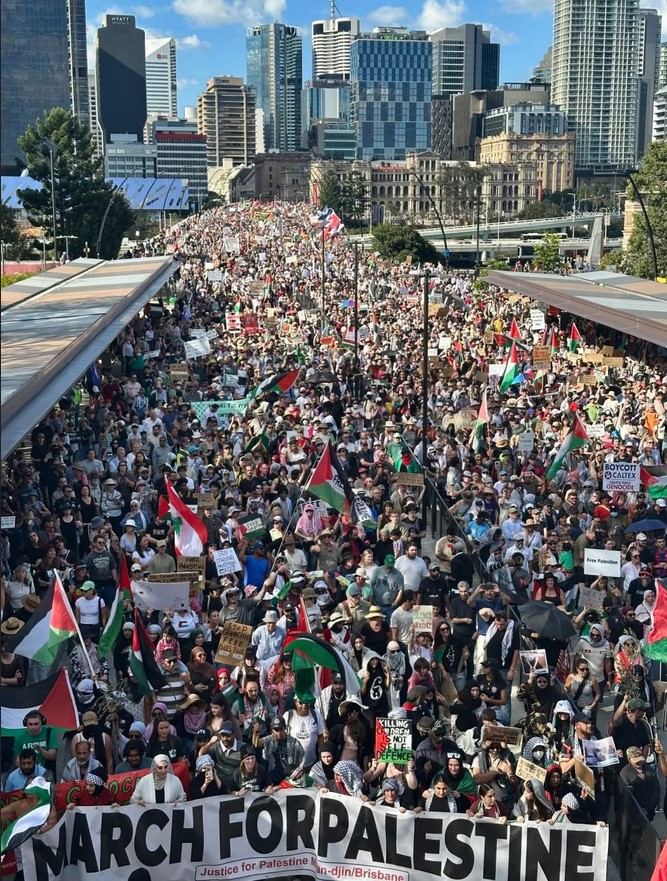
Popular democracy on the streets of Brisbane, 24 August 2025
20 May 2026
_______
Cold War Kid: Resisting the Vietnam War
An important new book on war and peace is almost out. Cold War Kid by Rowan Cahill is a personal account of the period from 1945 to 1972. As the publicity puts it, the book tells the story of how a would-be poet and beachcomber solo-sailor was drafted during the first Vietnam call-up in 1965 and became a prominent opponent of both war and conscription. It is a memoir but as historian Hannah Forsyth points out, it is so much more. “Rowan sees the militaristic thread through Australia’s history, the violence this history imposes on us all, and our individual and collective spiritual struggle to overcome it.” With war and militarism again pervading our lives, this is a book for our times. Order a copy here.
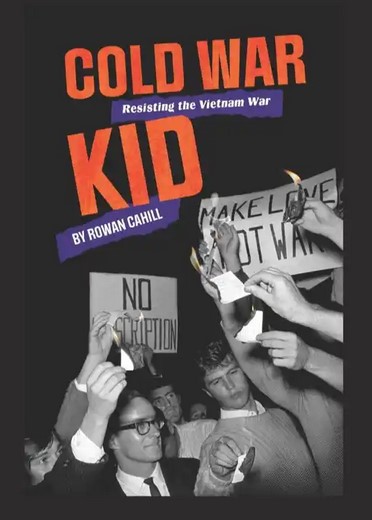
1 May 2026
_______
Workers Resisting Racism, North Queensland 1925-1935
Racism in Australia is on the march again. A referendum to give Aboriginal and Torres Strait Islander peoples a ‘voice’ to Parliament has been resoundingly defeated, a terrorist attack on an Invasion Day rally in Perth has been met with media and government indifference, migrants are being scapegoated for the housing and cost of living crises, governments are legislating to silence the voices of Palestinians, Aboriginal children are being incarcerated in record numbers, and One Nation is surging in the polls, mirroring the return of Trump and the rise of Reform in the United Kingdom.
As a product of a settler-colonial society founded on an ideology of (British) white supremacy and the dispossession and mass murder of Indigenous peoples, racism is deeply ingrained in the psyche of white Australia (a form of unconscious bias, as the psychologists would politely say). But the mechanisms for racism’s reproduction and how it intersects with the structures of class and gender have long been the subject of debate. It has been widely argued, for example, that the White Australia Policy was a creature of the labour movement, driven by either economic protectionism or attitudinal racism or some combination of both. Other writers have challenged these views, arguing that racism primarily articulates the material interests of the Australian employing class and the state.
In 1994 Jeff Rickertt tackled these questions directly in a study of racism and anti-racism in the North Queensland sugar industry in the decade from 1925 to 1935, written as a thesis for a Postgraduate Diploma of Arts at The University of Queensland. The study revealed an often-overlooked history of working-class unity in defiance of cultivated racialisation. Recently, the thesis has been digitised and preserved in UQ’s digital repository, eSpace. The digital version is now on open access, freely available for the public to consult. The Queensland Journal of Labour History believes it makes an important contribution to our understanding of racism in Australia.
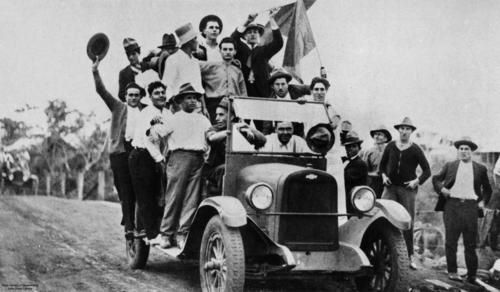
Southern European workers heading to a strike meeting, South Johnstone, 1927 (courtesy SLQ)
21 April 2026
_______
Peace is Union Business
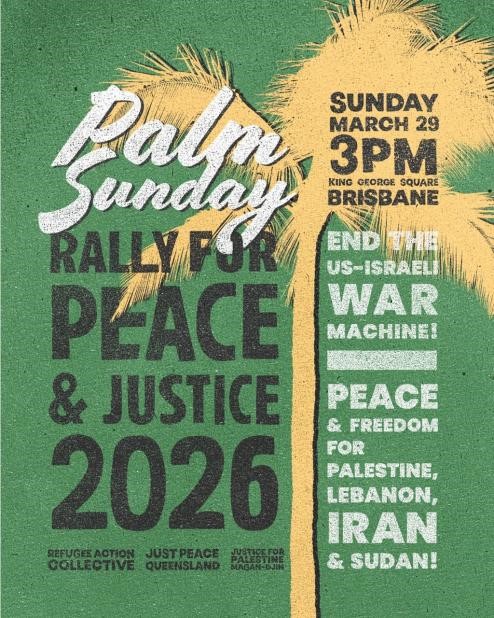
The 2026 Palm Sunday Peace Rally in Brisbane was organised by the Refugee Action Collective, Justice for Palestine Magan-djin, Just Peace Queensland and the Independent and Peaceful Australia Network (IPAN). For IPAN the theme was ‘End all wars’ and ‘End all preparations for war including AUKUS’. Justice for Palestine Magan-djin called for Peace & Justice for All! No More US/Israeli Wars! Freedom for Palestine, Lebanon, Iran & Sudan!
Brisbane’s Palm Sunday Peace Rallies started in 1982. Nuclear disarmament and an end to uranium mining were the themes of the early years. Subsequently, the emphasis shifted in response to international events such as the US interventions into Latin America, the Iraq War, the continuing killings in Gaza (termed as genocide by the International Court of Justice) and now in Lebanon, and the US-Israeli attacks on Iran. The harsh mistreatment of refugees in Australia has also been a prominent theme in recent times.
Brisbane Rally for Nuclear Disarmament, Palm Sunday 1983. The rally organising committee comprised Simon Blackwood, Bruce Doyle, Senator George Georges, Owen Pearson, Barbara Robson, Joan Shears and Greg Weir. George Georges chaired the rally. (Film courtesy of Leftpress Printing Society, available through the Radical Times Archives.)
The rallies are an enduring feature of the long struggle to end war and to look after its victims. They bring peace organisations together with religious groups and trade unions. Trade union involvement is especially important. Organisations concerned with the horrors of particular conflicts (such as those in West Papua, Palestine, Ukraine, Myanmar and Sub-Saharan Africa) look to the union movement for support. Broader peace groups also seek union alliances. IPAN, for example, has its own working group on unions and peace.
For their part, unions have an intrinsic interest in peace. Military conflicts directly affect workers. For example, it is reported that since October 2023 Israeli forces have killed 1,722 healthcare workers in Gaza, approximately 2 health workers per day. [i] Gazan doctors and nurses have also been abducted, incarcerated and tortured by Israeli forces. In Gaza every university has been destroyed. Teachers and administrators who have survived these attacks have been left without livelihoods, and most of them have been displaced from their homes. Media workers are another target. The Committee to Protect Journalists estimates that “a record 129 journalists and media workers were killed worldwide in 2025.” [ii] Over three-quarters were in conflict settings and two-thirds were in Gaza and Lebanon.
In a quite novel approach, the journalists’ union, the Media Entertainment and Arts Alliance (MEAA), established a Media Safety and Solidarity Fund in 2005 to directly assist families and children of slain media workers. MEAA members are asked to contribute the initial pay increase from new enterprise agreements. Families in Fiji, Nepal and the Philippines have been assisted by this scheme. [iii]
Maritime workers are another group directly affected by war. At the end of March 2026, the International Maritime Organisation reported that “some 20,000 seafarers remain stranded on ships in the Strait of Hormuz” and described this as “unprecedented in the post-Second World War era”. [iv] It lists 15 deaths on ships in the first 10 days of March. These may be underestimates; the Forward Seamen’s Union of India estimates around 23,000 Indian seafarers alone are in the conflict zone. [v]
War affects workers indirectly too. Military spending sucks resources away from the public provision of health, education, housing and social welfare. As evident in the current energy crisis, jobs and living standards are put at risk by war’s economic disruptions. For those living in war zones, the lasting environmental impacts fall disproportionately on people without the means to re-locate from contaminated areas, while war’s contribution to global warming impacts working communities in every part of the planet. War pits worker against worker along national lines and encourages them to side with ‘their’ governments and employers. This weakens solidarity. Put plainly, for workers, class comes before nationality.
In 2023, the Queensland Journal of Labour History printed a short history of union involvement in peace movements. The article, available here, documents demonstrations and other protest actions in response to armed conflicts over the previous 20 years. The list includes mobilisations against the Iraq War (2003-2011), the Indonesian military’s actions in Timor-Leste (1999-2000), the military regime in Myanmar across the 2000s and its coup in 2021, the civil war in Bougainville in the 1990s and the coups in Fiji in 1987, 2000 and 2006.
The pursuit of peace is justified by the union principle that ‘an injury to one is an injury to all.’ When capitalist nations go to war or when authoritarian regimes use military violence to stay in power, working people suffer more than any other section of society. One way or another, all workers are affected. War brings them no gains, only suffering and setback. Peace is in workers’ interests, peace is union business.
Howard Guille
3 April 2026
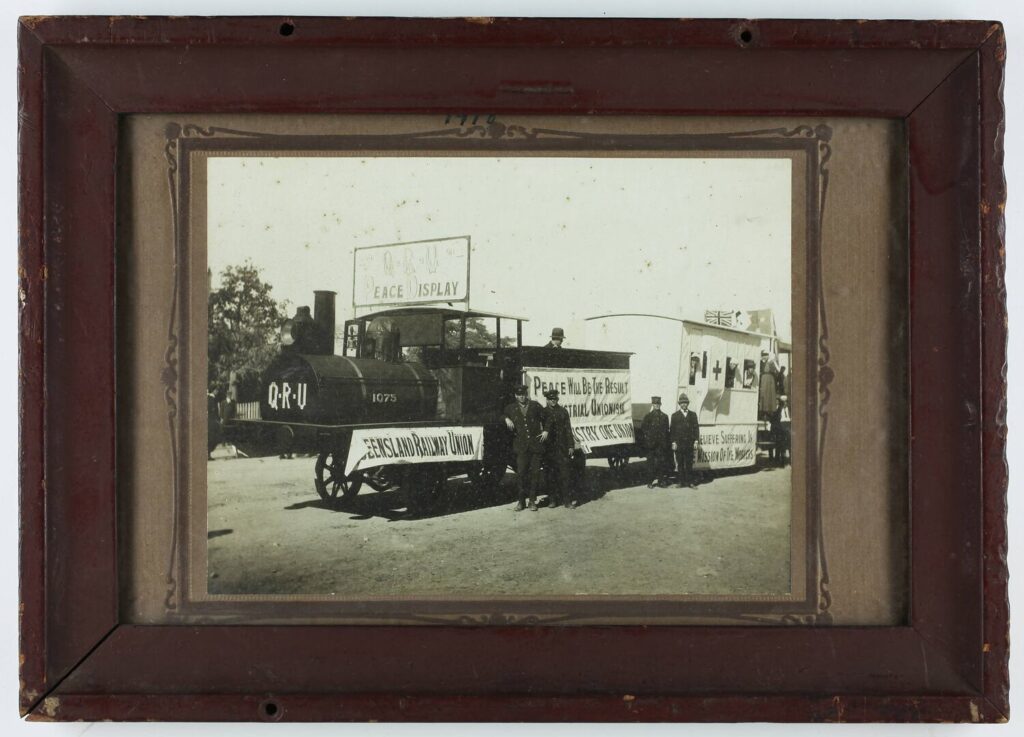
Queensland Railway Union peace display, 1918. The 1st obscured banner states ‘Peace Will Be the Result of Industrial Unionism – One Industry One Union’. The 2nd states ‘To Relieve Suffering is the Mission of the Workers’. (Courtesy Museums Victoria)
_______
The LNP and Queensland Heritage: A Fresh Start or A New Threat?
Under the National Party governments of the 1970s and 80s, Queensland’s record on protecting cultural heritage was appalling. Building after building succumbed to the wrecking ball as the Premier, peering out from his office high in the Executive Building, counted construction cranes as a metric of his government’s success. In 1992 the Labor government of Wayne Goss introduced the Queensland Heritage Act to slow, if not halt, the destruction. The legislation established a process for identifying and protecting the State’s remaining places of post-colonisation historical significance. Hundreds of sites have been preserved as a result. Though the original Act has been amended, its core provisions are still in force. Now the Liberal National Party, back in power, intends to review it. Howard Guille and Jeff Rickertt take a critical look at what the LNP might have in mind and put the case that heritage and the Heritage Act are union business.

Toowoomba Trades Hall, protected under the Queensland Heritage Act 1992.
The Queensland Government is reviewing the Queensland Heritage Act, the main legal instrument for identifying and protecting the State’s cultural heritage. The Minister, Andrew Powell, has announced “it’s time for a fresh start” and released a discussion paper, with proposed changes. The proposals are about post-colonisation heritage covered by the Act. They do not apply to Aboriginal and Torres Strait Island cultural heritage which are subject to separate legislation and processes.
The paper proposes some measures that would strengthen current protections, such as the introduction of a heritage duty of care for owners of heritage-listed sites, and a new power for the department or Minister to issue a temporary protection notice when a place under heritage assessment is at imminent risk of intentional damage. These would be positive changes. Unfortunately, they are the exceptions in a sea of proposals that will not improve and will possibly diminish heritage protection in Queensland.
We believe that, taken together, the proposals in the discussion paper would compromise the Act’s protections and sanitise how history is represented in the heritage system. The current post-colonisation heritage system already excludes too much. It is big on churches, war memorials and grand buildings. Places of the underlings are under-represented. Stories of labour, women, people of non-English background and other subaltern groups are either not collected or are written-out of the accounts of the places on the Heritage Register. The changes proposed in the discussion paper will make it even harder for working people and marginalised groups to preserve the heritage and stories that matter to them … read more.
Howard Guille & Jeff Rickertt
20 March 2026
_______
Alex Macdonald: Personal and Public
As a leader of the Communist Party of Australia, Secretary of the Queensland branch of the Federated Ironworkers’ Union, and Secretary of the Trades and Labor Council of Queensland, Alex Macdonald was a towering figure in the Queensland labour movement in the middle decades of the 20th century. In this article, Alex’s daughter Lynette Trad reflects on her father’s life and legacy.
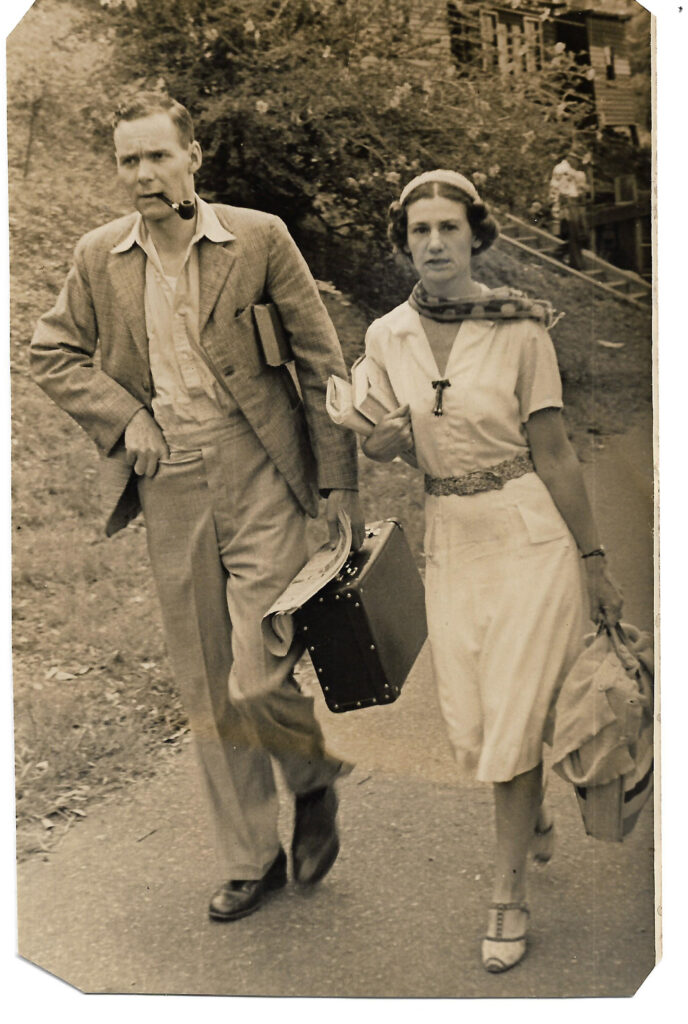
Alex Macdonald and Molly Macdonald (nee Neild)
My father, Alex Macdonald, was born in Greenock on the River Clyde, Scotland, on 21 May 1910, the middle of five children; his parents were Alexander Macdonald and Sybil Smith. His family origins on both parents’ sides are in the Isle of Lewis and Harris, in the Outer Hebrides of Scotland.
Dad’s mother Sybil died of tuberculosis in early 1917 before he was seven. His father Alexander then cared for the four eldest children in Greenock with the support of relatives and employed housekeepers. The youngest child, Colin, was a baby when their mother died; he was raised by two aunts on the croft where his mother had been born in the village of Leurbost in the Isle of Lewis. He subsequently raised his own family on that croft, where two of his children – my first cousins – live today.
In 1920 when Alex was ten his father married one of the housekeepers – ‘Steppie’ as the children called her was a cause of family breakup.
Dad left school at the age of twelve; ran away to London after his father’s remarriage; left home to live with aunts; and worked in a Greenock shipyard for a short time … read more.
Lynette Trad
18 February 2026
_______